


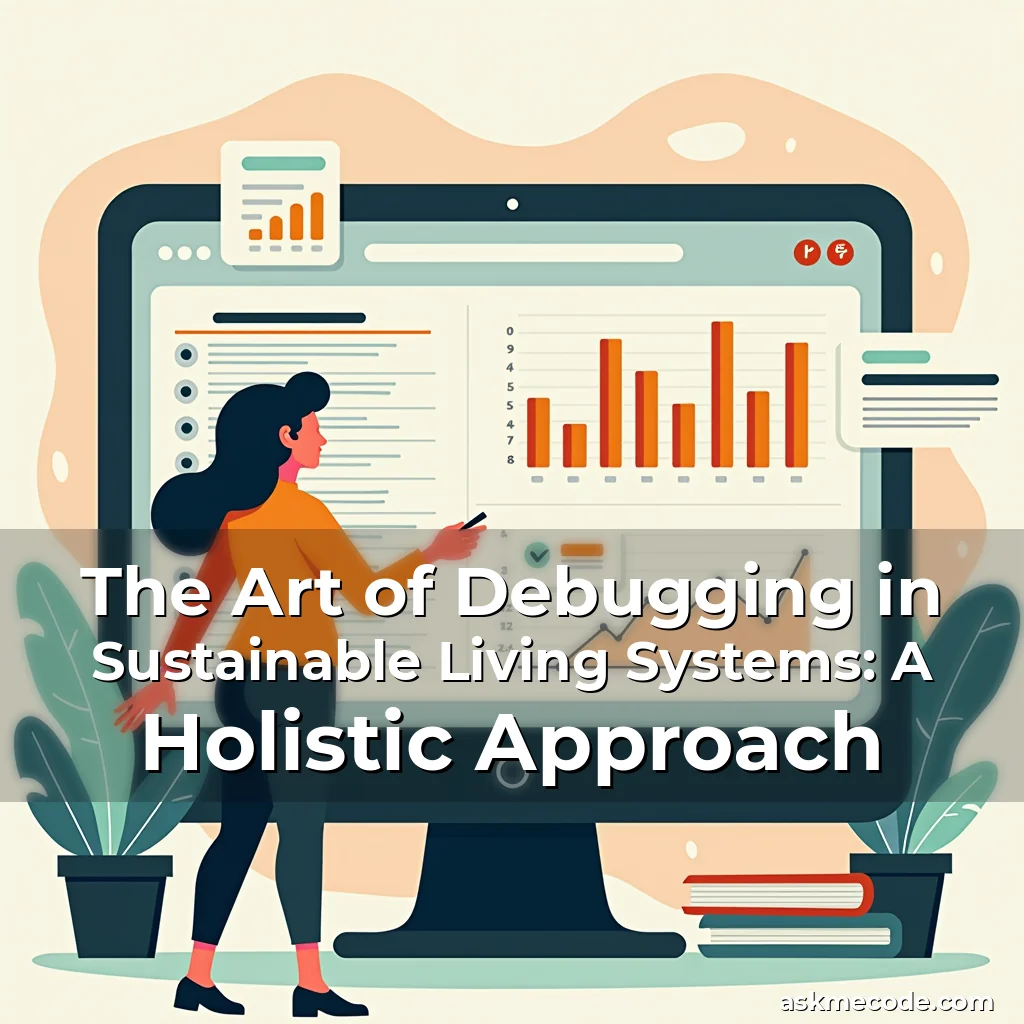
The Art of Debugging in Sustainable Living Systems: A Holistic Approach
In the realm of eco-friendly and sustainable living, where every action ripples through our environment, mastering the art of debugging is not merely a technical skill—it’s an essential practice that ensures our systems work harmoniously with nature.
Debugging here extends beyond software; it encompasses identifying inefficiencies in energy use, water conservation practices, waste management strategies, and even behavioral habits that may inadvertently harm sustainability goals.
Understanding the Core Principles of Debugging for Sustainability
To effectively debug within the context of sustainable living, we must first grasp its core principles—identifying discrepancies between intended outcomes and actual results while maintaining ecological balance as a top priority.
This process involves meticulous observation of resource consumption patterns, tracking environmental impacts over time, and applying logical deductions to pinpoint areas needing improvement without compromising long-term sustainability objectives.
By adopting a systematic approach akin to software debugging techniques used by developers worldwide, individuals can systematically analyze their lifestyle choices for potential improvements that align perfectly with green initiatives.
For instance, when reviewing monthly utility bills, recognizing sudden spikes might indicate inefficient appliances or leaks—analogous to error logs highlighting unexpected system behaviors in coding environments.
- Monitor Resource Usage: Regularly track electricity, water usage, and other key metrics using smart devices or manual records to detect anomalies quickly.
- Analyze Environmental Impact: Evaluate how daily activities affect local ecosystems through carbon footprint calculators or community impact assessments.
Tackling Common Challenges in Eco-Friendly Debugging Processes
Sustainable debugging presents unique challenges distinct from traditional IT troubleshooting methods due to the complex interplay among various natural elements involved in any given scenario.
One common challenge arises when attempting to isolate variables affecting sustainability efforts—for example distinguishing whether increased plant growth stems solely from improved soil quality versus additional sunlight exposure after adjusting window positions.
Moreover, data collection becomes significantly more intricate since many aspects influencing environmental health cannot be easily quantified numerically unlike digital errors which often manifest clearly via error codes or performance indicators.
These complexities require innovative solutions such as employing citizen science projects where communities contribute observations about local biodiversity changes linked back to specific sustainability interventions being tested.
Case Study Insights: Real-Life Applications Of Sustainable Debugging Techniques
A notable case study comes from urban gardens implemented across several European cities aiming to reduce food miles associated with conventional agriculture supply chains.
Through continuous monitoring of crop yields alongside factors like rainfall levels, temperature fluctuations, and pest infestation rates researchers were able to refine irrigation schedules thereby reducing overall freshwater consumption by up to thirty percent annually.
This real-world application demonstrates how methodical analysis combined with adaptive adjustments leads towards greater efficiency gains aligned closely with global climate targets set forth by international bodies concerned with planetary well-being.
Such examples highlight the importance of persistence and patience required during debugging phases especially considering natural processes usually unfold gradually making immediate feedback less apparent than what one would expect encountering bugs in computer programs.
Cultivating Mindful Awareness Through Daily Practices For Better Debugging Outcomes
Mindfulness plays a crucial role in enhancing both personal awareness regarding everyday actions impacting surroundings positively or negatively along side improving problem-solving abilities necessary for successful debugging endeavors.
Practicing mindfulness meditation helps cultivate attention span allowing individuals better focus when observing subtle shifts indicative of underlying issues requiring resolution within their sustainable living frameworks.
Additionally incorporating reflective journaling routines enables clearer understanding about which particular decisions made previously resulted either beneficially or detrimentally upon broader environmental contexts thus aiding future decision-making processes aimed at achieving optimal sustainability levels consistently.
Engaging regularly in these mindful exercises fosters deeper connections between oneself’s life choices and wider ecological implications promoting conscious behavior modifications geared toward fostering resilient ecosystems around us all.
Leveraging Technology Tools To Enhance Your Debugging Capabilities In Green Initiatives
Modern technology offers numerous tools designed specifically for assisting those committed fully embracing low-impact lifestyles including apps related primarily focused onto optimizing household resources efficiently.
Smart home automation platforms allow users control lighting fixtures based on occupancy sensors thereby minimizing unnecessary power wastage similar conceptually comparable detecting memory leaks within applications consuming excessive RAM spacelessly.
Similarly IoT-enabled meters provide granular insight regarding appliance energy consumption profiles enabling targeted upgrades replacing outdated equipment contributing disproportionately high amounts towards total electricity bill figures.
Integrating AI algorithms trained upon historical weather pattern datasets allows accurate prediction models forecasting precipitation chances helping gardeners plan watering cycles precisely avoiding excess runoff polluting nearby water sources unnecessarily.
Emerging Innovations Shaping Future Directions Of Eco-Conscious Debugging Strategies
Rapid advancements occurring currently across fields involving renewable energies storage solutions present exciting opportunities transforming how people engage actively participate meaningfully within ongoing sustainability movements globally.
Battery technologies evolving continuously offer enhanced capabilities storing solar generated electricity longer durations facilitating seamless transitions away reliance fossil fuels powering homes businesses alike effortlessly.
Pioneering developments surrounding hydrogen fuel cells promise cleaner alternatives transport sectors eliminating greenhouse gas emissions entirely potentially revolutionizing entire industries dedicated formerly petroleum products dependent operations.
As these technological breakthroughs continue unfolding they necessitate constant reevaluation existing approaches taken towards debugging methodologies ensuring alignment remains maintained throughout progression timelines ahead.
Fostering Community Engagement As Vital Component Within Sustainable Debugging Frameworks
Building strong networks amongst fellow eco-conscious citizens proves invaluable supporting collective progress addressing shared concerns concerning environmental degradation through collaborative investigative efforts.
Local workshops focusing exclusively upon diagnosing systemic problems plaguing neighborhoods could serve dual purposes educating attendees simultaneously empowering them take proactive measures rectify identified flaws promptly.
Online forums dedicated discussion topics revolving around best practices employed successfully elsewhere world enable cross-pollination ideas leading ultimately creation novel hybridized strategies tailored uniquely fit regional conditions prevailing locally.
Encouraging open communication channels facilitates quicker dissemination information critical timely intervention preventing escalation minor issues becoming full-blown crises detrimental ecosystem integrity later stages development cycle.
Educational Resources Available Supporting Individuals Pursuing Mastery Over Sustainable Debugging Skills
Various educational institutions now offering specialized courses equipping students knowledge base sufficient tackle multifaceted challenges inherent managing complex interactions found within modern environmentally responsible living paradigms.
University level programs covering subjects ranging from ecological engineering right down grassroots activism trainees thoroughly prepare transition smoothly roles champions change agents driving forward momentum behind greener societies everywhere planet Earth inhabited.
Workshops held periodically locations throughout globe bring together experts practitioners exchanging latest research findings practical field experiences gained firsthand implementing sustainable debugging protocols successfully.
Accessibly positioned online repositories containing whitepapers case studies video tutorials constitute treasure troves wealth know-how accessible anyone desiring acquire expertise domain regardless geographical limitations restricting physical attendance events otherwise.
Overcoming Obstacles Encountered During Implementation Phases Of Sustainable Debugging Projects
Despite clear benefits derived pursuing rigorous debugging procedures directed towards attaining higher degrees sustainability, obstacles inevitably arise hampering smooth execution plans devised initially.
Common hurdles include resistance stemming from entrenched beliefs favoring convenience over consciousness particularly evident situations demanding significant lifestyle alterations perceived inconvenient disruptive current routines established firmly over years prior engagement movement.
Financial constraints also pose considerable barriers limiting access premium tools services necessary achieve precise measurements required conducting thorough investigations accurately assessing effectiveness proposed remedies applied situations encountered.
Addressing these impediments requires strategic planning coupled flexible mindset willing adapt circumstances dynamically responding unforeseen complications emerging course project implementation.
Measuring Success And Iterative Refinement In Ongoing Sustainable Debugging Efforts
Establishing measurable benchmarks serves cornerstone evaluating success achieved through sustained commitment practicing effective debugging methodologies centered around preserving planetary health priorities paramount consideration throughout entire lifecycle management initiatives undertaken.
Quantifiable metrics encompass reduction percentages recorded relating electricity usage volumes saved compared baseline readings pre-intervention periods providing tangible evidence validating efficacy adopted strategies utilized correcting detected faults promptly.
Qualitative assessments equally vital gauging intangible rewards accrued participating active members communities benefiting from enhanced environmental stewardship cultivated through consistent application sound diagnostic principles diligently followed during regular maintenance checks performed routinely scheduled intervals.
Continuous iteration informed feedback loops formed between observed outcomes planned objectives allows refinement tuning parameters optimized further improvements realized subsequent cycles testing new hypotheses formulated grounded solid foundation previous successes failures experienced thus far journey striving perfect harmony human existence earth itself.
Conclusion
The integration of debugging principles into sustainable living not only enhances individual efforts but also contributes to larger communal goals of environmental preservation and resilience.
By approaching sustainability with the same analytical rigor as software developers troubleshoot code, we empower ourselves to create more efficient, eco-friendly systems that benefit both our lives and the planet.


news is a contributor at AskMeCode. We are committed to providing well-researched, accurate, and valuable content to our readers.
You May Also Like


Front-End Development on a Budget: Money-Saving Tips
The Eco-Conscious Developer's Toolkit: Building Sustainable Web Experiences In an era where digital footprints rival physical ones, front-end developers hold...

Quick Code Optimization Solutions Under 30 Minutes
Quick Code Optimization Solutions Under 30 Minutes In today’s fast-paced digital world, developers face mounting pressure to deliver high-performing applications...

Back-End Development for Beginners: Getting Started
Back-End Development for Eco-Conscious Developers: Building Sustainable Web Applications In an era where digital solutions are increasingly shaping our daily...

The Green Code Engine: How Back-End Development Powers Sustainable Living Innovations
The Green Code Engine: How Back-End Development Powers Sustainable Living Innovations In an era where sustainability is both a moral...